
This post was originally published in The Atlantic.
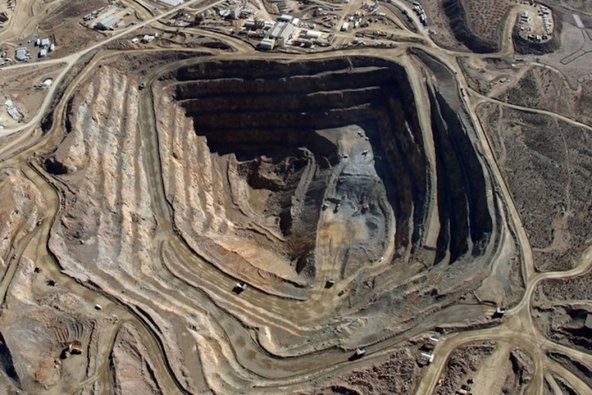
That big hole in the ground? It’s a pit mine at the Molycorp Mountain Pass rare earth facility in California’s Mojave Desert. Metals mined from pits like that were used to make the cell phone in your pocket and the computer screen you’re staring at right now. I visited Molycorp two weeks ago, as part of our investigation into the sources and consequences of consumer electronics manufacturing.
What are Rare Earths?
Molycorp is the only US company that produces the rare earth metals used in devices ranging from wind turbines and electric vehicles to missile-guidance systems and compact fluorescent lightbulbs. There are seventeen rare earth elements, including praseodymium (used to make photographic filters), neodymium (used to make permanent magnets in hard drives and other electronics), and europium (used to make fluorescent light bulbs and TV screens).
Rare earths are used in a wide variety of electronics and clean energy technology. Somewhat counterintuitively, rare earths are not rare in the earth’s crust; however, they tend to be dispersed in tiny quantities throughout the crust. They’re often located within minerals such as bastnaesite and monazite, which makes them difficult and expensive to mine.

The Rise and Fall—and Rise Again—of Molycorp
At one point, the majority of the world’s rare earths were mined at the Mountain Pass facility. Then, in 1998, Molycorp halted chemical processing at the mine following an environmental disaster; radioactive wastewater flooded the nearby Ivanpah Dry Lake. At the same time, China was dramatically increasing its rare earth production.
The resulting lower market prices forced Molycorp to close their mine in 2002. Although Molycorp has continued to extract metals from stockpiles of ore mined at Mountain Pass, China now produces between 96% and 99% of the world’s total rare earth supply. The government carefully allocates supply to individual companies to support domestic electronics production. In 2009, they cut export quotas of rare earths from 50,000 to 30,000 tonnes, sending already-high prices on international markets even higher.

Molycorp has been working for several years to begin mining for rare earths once again, to help wean US manufacturers off Chinese imports. This year, they will reopen the Mountain Pass mine, an operation they’ve aptly named “Project Phoenix.” Getting to this point, however, has been expensive—about $1 billion so far—and has required a lot of special environmental permits.
In July 2010, Molycorp went public on the NYSE with an Initial Public Offering of $394 million. In December 2010, they secured permits to start building a mining and manufacturing center so they could resume mining light rare earth elements such as neodymium and europium. The next month, they started mining bastnaesite ore.
In October 2011, Molycorp announced that they discovered a heavy rare earth deposit near their Mountain Pass facility and received permission to drill two months later. The heavy rare earths terbium, yttrium, and dysprosium are necessary for manufacturing wind turbines and solar cells, so the government has a particular interest in finding sources of those elements within the US.
Government Involvement
The Department of Energy released a Critical Materials Strategy report last month, which found that rare earths are necessary for clean energy technology, that the supply of those heavy rare earths is particularly at risk, and that Molycorp is the most promising rare earth project outside of China.
What’s Happening at Mountain Pass Today?

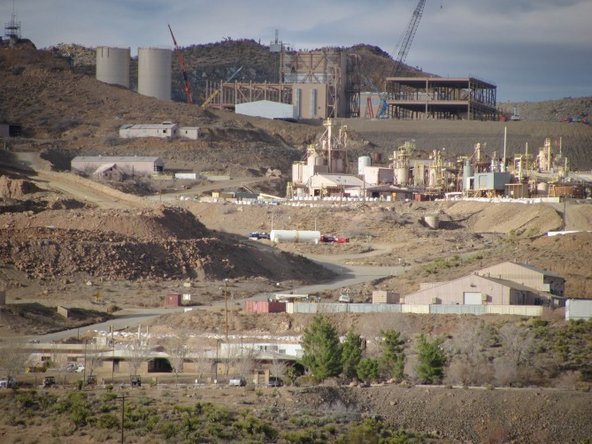
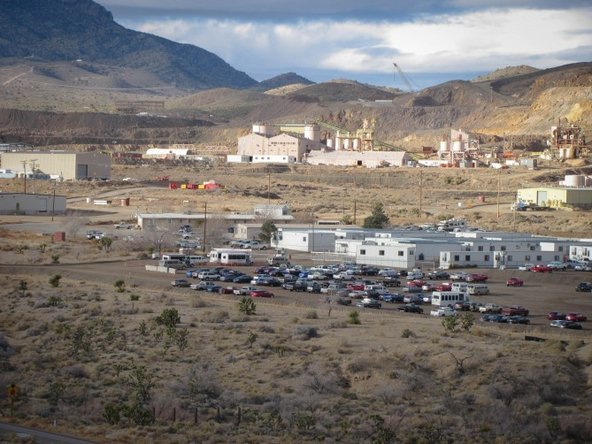
I first visited Mountain Pass just over a year ago, when I took the photo above. The signs of Molycorp’s expansion since then are striking: there are many more buildings (some presumably part of the new processing facility), lots of cars in the parking lot, and employees buzzing around.
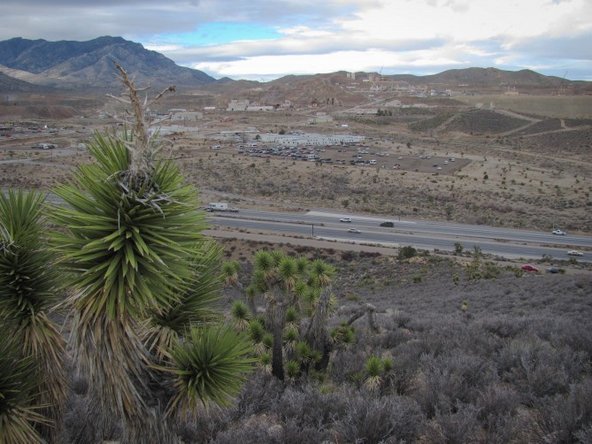
A few weeks ago, Molycorp reported that more than 75% of their Phase 1 production (i.e. all the rare earths they will produce between now and the end of September, about 19,050 tonnes) has been spoken for. In preparation, Molycorp has been hiring and expanding dramatically: it plans to hire 25 people every quarter until it reaches 200 employees.
Molycorp declined repeated requests to comment. When I stopped to take pictures of the mine, I got a chance to speak to a Molycorp geologist who was hired about 9 months ago and wouldn’t give his name. He told me that the mine runs 24/7 because the equipment is hugely expensive; it couldn’t be profitable otherwise. Most Molycorp Mountain Pass employees today have been hired within the last year, and most of them commute from Las Vegas. There isn’t much in the way of housing in Mountain Pass, which has a population of 30.
Around the facility, employees drive large Dodge trucks. The trucks have little orange safety flags on a tall pole so they don’t get run over by excavators. No one’s been run over yet, the geologist assured me.
Why Does it Matter?
By controlling the world supply of rare earths, China is trying to create a barrier for anyone attempting to manufacture electronics elsewhere.
While most electronics are still manufactured in China, plants are opening around the world. The electronics manufacturing giant Foxconn, for example, has several plants in Europe, India, and Mexico, and is about to open a plant in Brazil. All of these plants are currently subject to China’s export taxes and artificial limitations of supply—if Mountain Pass production is as high as expected, that may change.
Also, though they’re not actually rare earth elements, I’m excited to hear about two other items of the list of materials Molycorp will be producing: niobium and tantalum, used to make electronic capacitors. Having a domestic, ethically mined source of niobium and tantalum would be a huge boon for US electronics manufacturers. Currently, recycled devices are the only domestic source of tantalum.
Regardless, we’ll be keeping our eyes on Molycorp this year.
Pit mine photo thanks to Molycorp. All other photos thanks to Kyle Wiens.


One Comment
I don't know if there is a need to use rare earth solar lights. I think it should be no.
Bluntzhou - Reply